It arrives about ninety seconds after the laziness question, usually with a small note of triumph, as if it were checkmate. Fine — but who cleans the toilets? It's a fair question. It also has an uncomfortable answer about the present, which is where we should start.
Notice how we solve it now
We solve it with desperation, and we don't like to say so.
Look at the jobs nobody wants: sanitation, night cleaning, elder care, meat processing, roadside work in bad weather, the parts of agriculture that break bodies. Now look at what they pay. There's a rough inverse relationship between how unpleasant and necessary a job is and how well it's compensated, and it holds across most of the world.
That isn't because the work is easy or unimportant. It's because a wage isn't set by the value of the work. It's set by the alternatives available to the person doing it. When someone has no other option, their labor is cheap, and the cheapness has nothing to do with what they produce.
You can test this in one thought. Stop the sanitation workers in any city for a week and you have a public health emergency. Stop any one of a dozen far better-paid professions for a week and most people wouldn't notice. We already know what the work is worth. We just don't pay for it.
The pandemic made this unusually visible. Around the world, governments drew up lists of the people who could not stop: the cleaners, the shelf-stackers, the delivery drivers, the care assistants, the waste crews. We called them essential, applauded them from balconies, and then declined, almost everywhere, to change what they were paid. It was a rare moment of a society reading its own accounts out loud and noticing that the two columns did not match.
The dirty jobs aren't badly paid despite being essential. They're badly paid because the people doing them can't say no.
Answer one: reward follows benefit, unpleasantness included
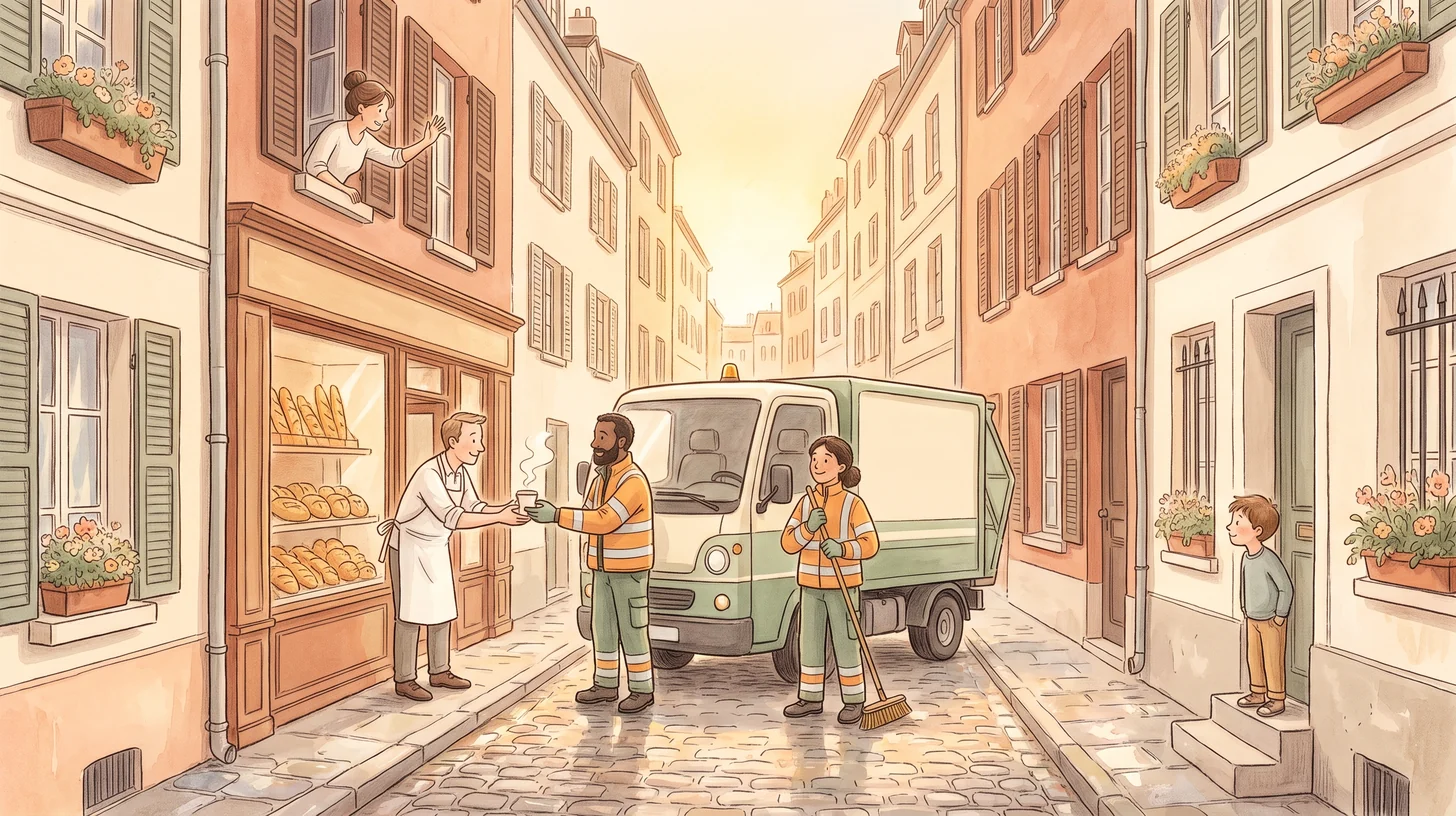
Copiosis severs the link between what you're paid and how few options you have. NBR is generated by the net benefit your work produces for other people, and keeping a city's sewers working is enormous benefit — measured, as it should be, by the scale of the harm that arrives when nobody does it.
Now add the second effect. If few people are willing, the benefit of the person who is willing goes up, because the gap they're filling is larger. The reward rises until enough people find it worth doing. That is not a moral upgrade to human nature. It is just what the accounting says once you stop measuring a worker's desperation and start measuring what their work is worth to everyone else.
The predictable result is close to an inversion of today: essential, unpleasant, hard-to-fill work becomes some of the best-rewarded work available, rather than the worst. And critically, nobody is assigned to it. It's a job people take because it's genuinely worth taking — which, if you think about it, is the only arrangement anyone claims to want.
There's a second-order effect worth naming, because it's the part that actually changes lives. Status tends to follow reward. Low pay doesn't merely leave someone with less money; it marks them, publicly, as a person whose work is worth little, and everyone including them absorbs that reading. Invert the reward and you invert the signal. The person keeping the water safe stops being someone to be quietly grateful for and starts being someone who is obviously doing well, for obvious reasons.
Answer two: a lot of it stops existing
Some of the worst work should be done by machines, and increasingly can be. The reason it often isn't is uncomfortable: cheap desperate labor is cheaper than a robot. Remove the desperation discount and the case for automating the dirtiest tasks improves immediately — and the machines keep getting cheaper anyway.
Then there's design. Under money, plenty of things are built to be difficult to maintain, because maintenance is somebody else's cost. When harm counts against the maker's reward, the incentive to design out the nasty job appears at the drawing board rather than after it.
And a startling amount of unpleasant work exists only because money exists. Debt collection. Insurance claim denial. Aggressive telemarketing. Entire buildings of people processing the friction that money itself creates. Those jobs don't need to be filled in a world without them; they simply stop, along with the low-grade misery of doing them. We walked through one of those mornings a few weeks back.
Answer three: some of it we should just share
There's a third answer people forget, because money has trained us to think every problem is a pricing problem. Some unpleasant work is best handled by a community sharing it — rotation, shared duty, everyone taking a turn. Copiosis doesn't mandate that and doesn't forbid it. It's worth remembering that "pay someone else more to do it" is not the only civilized answer humans have ever found.
What we're not telling you
This is a design intention, not a demonstrated mechanism.
The whole argument leans on the algorithm actually weighting scarcity of willingness, and weighting it enough. That's a design choice, the specification is unfinished, and getting the weighting wrong in either direction has obvious failure modes: too little and the work goes undone, too much and you've built a strange new lottery. The deep dive is honest about how much of this remains to be settled.
There's also a real possibility we should say plainly. Reward may not be enough. Some work might be so genuinely unpleasant that no reward recruits sufficient people, at which point a society has to do something else — rotate it, automate it faster, or accept a lower standard. We don't know which jobs those are, and we won't until someone tries.
Finally, the honest note. "We'd pay them more" is easy to write. Today's economy could pay sanitation workers more tomorrow and doesn't. What Copiosis changes is the structural reason it doesn't — the wage stops tracking the worker's lack of options. That's an argument about structure. It isn't a guarantee about outcomes, and we won't dress it up as one.